Makeup for Dark Skin: What Most Artists Still Get Wrong
There is one mistake I see repeatedly when other artists work with dark and deep skin tones: they treat it like any other skin, only darker. They reach for the wrong foundation, they apply the wrong technique, and the result is a face that looks grey, flat, ashy — the opposite of what this skin is capable of.
Dark skin, when treated correctly, is extraordinary. It has a natural luminosity, a depth, a richness that no other skin tone possesses. The goal is never to cover it. It is to elevate it.
The Skincare Foundation Is Non-Negotiable
Dark skin tends to produce more sebum than lighter skin tones, which means the preparation phase is even more important. Before any makeup touches the face, I cleanse thoroughly — removing excess oil and impurities that would otherwise interfere with the foundation and cause it to oxidise or shift.
After cleansing, I apply a mattifying, sebum-regulating moisturiser. This creates a balanced base — not stripped, not shiny — that allows the foundation to sit correctly on the skin and last throughout the day or shoot.
Skip this step, and even the best foundation in the world will not perform as it should.
The Grey Cast Problem — and How to Avoid It
The most common mistake I see is foundation selection. Specifically: using a foundation with the wrong undertone, which creates what is known as a grey cast — a flat, ashy appearance that drains the skin of its natural warmth and life.
This happens because many artists select foundation by matching the depth of the colour alone, without considering the undertone. Dark skin comes in an extraordinary range of undertones — warm (golden, orange, red), cool (blue, purple, red-blue), and neutral. Each requires a completely different foundation.
My approach is observational and intuitive. I study the skin in natural light, look at the undertones visible at the jawline and neck, and make my selection in the moment — based on years of experience reading skin. There is no formula that replaces this. You have to look, and you have to know what you are seeing.
For the brands I trust: Lancôme, YSL Beauty and Dior have the most comprehensive and thoughtful shade ranges for dark and deep skin tones. Their deepest foundations are formulated with warmth — not simply darkened versions of lighter shades — which makes all the difference.
Sculpting in Reverse
This is the technique that changes everything for dark skin, and it is the opposite of what most artists are taught.
On light skin, sculpting means adding shadow — darkening the hollows of the face to create the illusion of depth and structure. On dark skin, this approach simply disappears. The skin is already rich and deep. Adding more darkness achieves nothing.
Instead, I sculpt with light. I identify the strategic points of the face — the high points of the cheekbones, the bridge of the nose, the brow bone, the centre of the forehead — and I illuminate them. By bringing light to these areas, I create dimension and structure without ever touching the rest of the face with a contour product.
The result is a face that looks sculpted, three-dimensional, alive — not because shadow has been added, but because light has been placed with precision.
The Colours That Elevate Dark Skin
Colour selection on dark skin is one of the most creative and rewarding aspects of this work. The palette that performs best is bold, warm, and luminous:
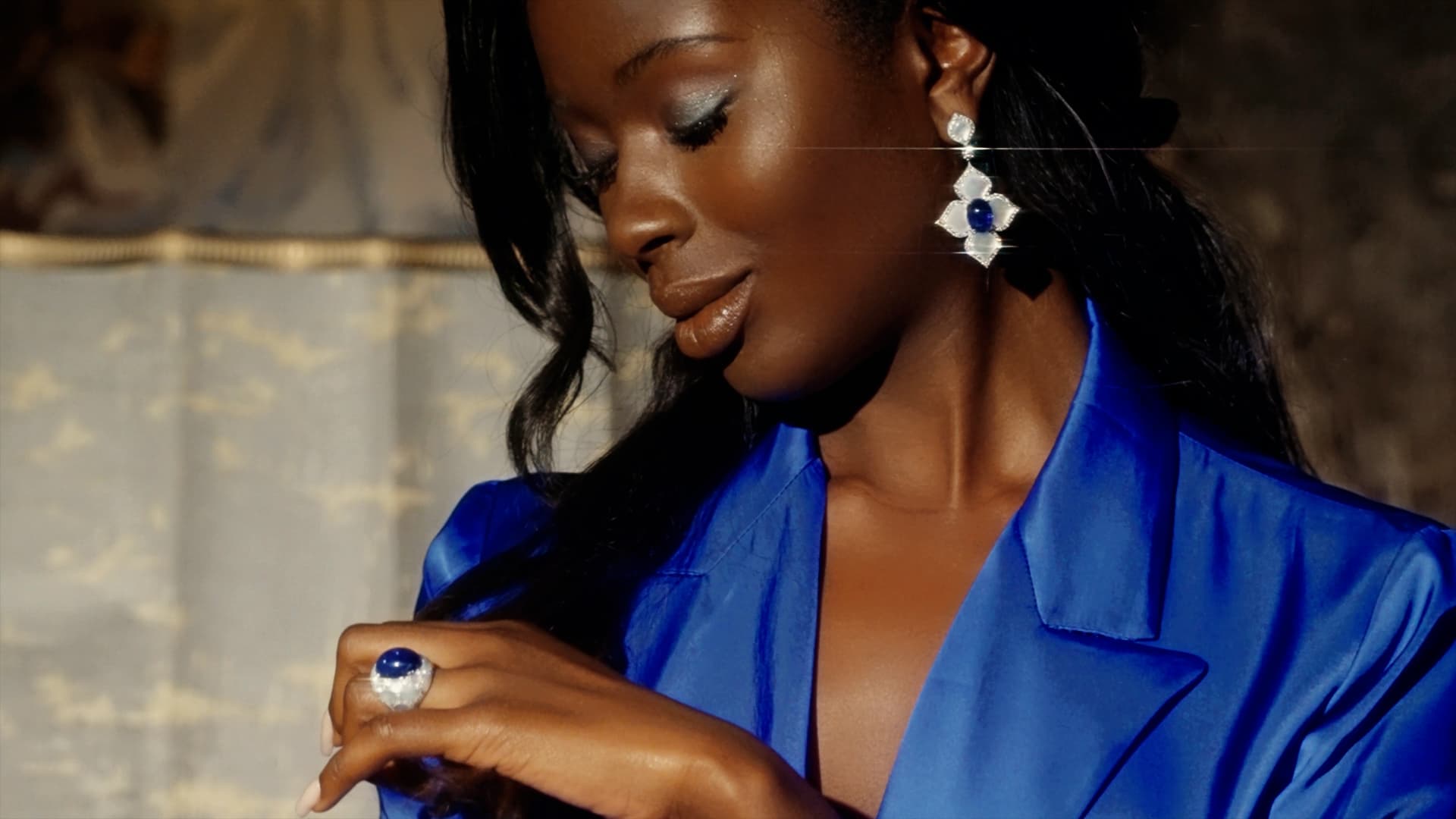
Gold — perhaps the single most transformative element on dark skin. Whether as an eyeshadow, a highlighter, or a subtle inner corner accent, gold against deep skin creates a warmth and radiance that is simply stunning.
Pearl grey and white pearl — unexpected and extraordinary. A pearl grey or icy white on the lid creates a contrast that opens the eye dramatically and gives the look an editorial, high-fashion quality.
Aqua blue — against deep skin tones, this colour vibrates with an intensity that is impossible to achieve on lighter complexions.
Red wines and burgundies — on the lips especially, these shades are made for dark skin. They carry weight and sophistication that feel entirely natural on deeper complexions.
Burnt orange and terracotta — warm, earthy, and deeply flattering. These tones echo the warmth already present in dark skin and amplify it.
What I avoid: brown neutrals, black, pink, purple, and mauve. These tones either disappear against dark skin or create a heaviness that works against the natural beauty of the complexion. They flatten instead of elevate.
A Note on the Experience
Working with dark skin is one of the most rewarding parts of my practice. The potential for drama, for luminosity, for colour — it is simply greater than on any other skin tone. When the preparation is right, the foundation is matched correctly, the sculpting is done with light rather than shadow, and the colour is chosen with intention, the result is extraordinary.
If you are a woman of colour looking for a makeup artist in Rome who understands your skin — and who knows how to make it look not just beautiful, but remarkable — I would love to work with you.